
Follistatin Peptide
Showing all 4 results
Showing all 4 results
Follistatin 344 and the gap between two very different things
Follistatin binds and inhibits myostatin, the protein that limits muscle growth. The images that circulate — extraordinarily muscled animals produced by follistatin research — are real. This section holds 4 lines from £108 to £204, averaging near £139, the most expensive peptide section stocked.
Where those results came from
The dramatic animal results were produced by gene therapy: viral vectors delivering the follistatin gene into muscle tissue, causing the muscle itself to produce follistatin continuously, locally, for the animal’s lifetime.
That is a fundamentally different intervention from injecting a peptide. One permanently alters what the tissue produces; the other introduces a protein that circulates briefly and clears. Presenting results from the first as though they describe the second is the central problem with how this compound is sold.
The half-life problem
Circulating follistatin is cleared rapidly — its half-life is short, measured in minutes to hours. Sustained myostatin inhibition through periodic injection would require maintaining levels the pharmacokinetics do not support.
Add to that the difficulty of getting an intact protein of this size to its site of action after injection, and the mechanistic case for the injected form is considerably weaker than the imagery implies.
What “344” refers to
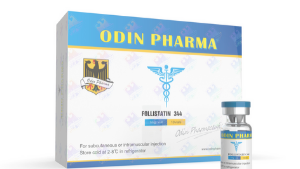
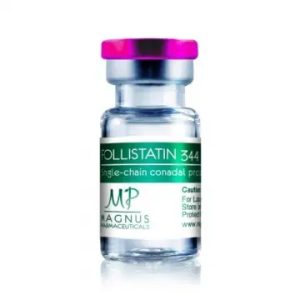
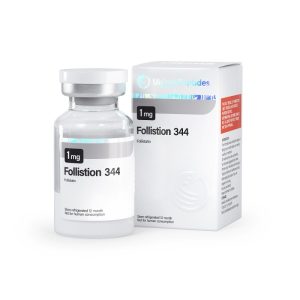
Follistatin exists in isoforms of differing length. FST-344 is the 344-amino-acid form, the precursor from which shorter isoforms derive, and it binds to cell surfaces differently from FST-315. Products are labelled by isoform, though whether that distinction survives the delivery problems above is another matter.
Against the alternative claim in this catalogue
YK-11 is also sold on myostatin inhibition, by a different route — raising follistatin production rather than supplying it. Neither has human evidence demonstrating meaningful myostatin inhibition at achievable doses. Both are in the peptides and SARM ranges on the strength of mechanism rather than outcome.
Verification matters at this price point: see how to check a brand is genuine.
Why myostatin inhibition attracts so much attention
Because the ceiling it represents is real. Myostatin genuinely limits muscle growth, and animals and the small number of humans with myostatin-related mutations demonstrate what happens when that limit is absent. The biology is not in doubt.
What is in doubt is whether any commercially available product meaningfully interferes with it. Every myostatin-related product sold anywhere rests on that gap between an established mechanism and an unestablished intervention.
What to expect if you buy it
Honestly, very little that is measurable. Given the clearance rate and the delivery difficulty, the realistic expectation is not the animal imagery but something closer to nothing detectable. That is an unusual thing for a retailer to write about a £139 product, and it is what the pharmacology supports.
Handling
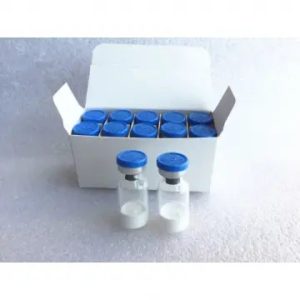
Lyophilised on arrival, reconstituted with bacteriostatic water, refrigerated afterwards. It is not suppressive and requires no post cycle therapy.
Reading the price
At £108 to £204 the spread reflects quantity per vial rather than any difference in the protein. Comparing cost per microgram is the only fair way to read this section, and it is worth doing carefully given that it is the most expensive peptide category stocked.
What a realistic buyer should know
Follistatin is genuinely important biology and this is a genuine protein. Neither of those facts establishes that injecting it produces a measurable outcome, and the distance between the two is the whole of what this page is about.
Frequently asked questions
Does injected follistatin build muscle?
No human evidence supports it. The striking animal results came from gene therapy, not injection.
What is the difference?
Gene therapy makes the muscle produce follistatin continuously. An injection introduces a protein that clears quickly.
What does 344 mean?
The 344-amino-acid isoform, the precursor form, which binds cell surfaces differently from FST-315.
Why is it so expensive?
It is a large protein and difficult to synthesise. This is the priciest peptide section stocked.
Is it the same as YK-11?
No. YK-11 raises follistatin production; this supplies follistatin. Neither is demonstrated in humans.


