Bpc-157 Peptide
Showing 1–12 of 16 results


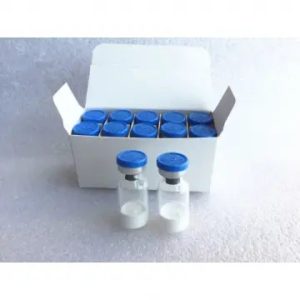


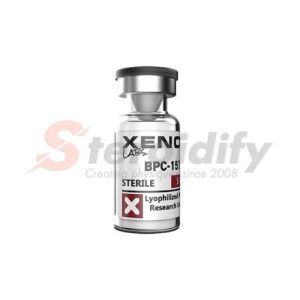

Showing 1–12 of 16 results
What BPC 157 is
BPC 157 is a synthetic fifteen-amino-acid sequence derived from a protein found in gastric juice — the name stands for Body Protection Compound. It is supplied as lyophilised powder for laboratory research and is not a licensed medicine anywhere. This section carries 16 lines from £50 to £240, clustered near £72.
It attracts more interest than almost any other peptide, and the gap between that interest and the published human evidence is worth stating clearly.
What the research actually supports
| Claim | Evidence base |
|---|---|
| Tendon and ligament healing | Extensive rodent data; no completed human trials |
| Gastrointestinal protection | The original research focus, animal models |
| Muscle repair | Animal data; human evidence absent |
| Neurological effects | Early animal work only |
The honest position: the animal literature is genuinely substantial and consistent, and it has not been replicated in controlled human trials. That is not the same as saying it does not work — it means nobody has established that it does, at what dose, or with what long-term profile.
Handling and reconstitution
Every vial arrives freeze-dried because the peptide is unstable in solution. Reconstitution is done by the purchaser with bacteriostatic water, which means final sterility depends on technique rather than on what shipped. Once mixed it degrades — refrigerate it, and treat a vial left at room temperature as compromised.
Concentration is a function of the water added rather than a property of the vial, and that arithmetic is the commonest error in this category. The consumables sit in the wider peptides range.
How it is commonly paired
BPC 157 and TB-500 are frequently run together on the reasoning that they act through different repair pathways. Both sit in this catalogue — TB-500 in the T-500 section — and both carry the same evidential caveat. Pairing two compounds with animal-only data does not produce human-grade evidence for either.
Why the evidence gap matters commercially
A compound with strong animal data and no human trials sits in an awkward place: plausible enough that people buy it, unproven enough that nobody can tell you a dose, a duration or a safety profile with any authority. Anyone quoting you precise protocols is extrapolating from rodent studies, which is a considerably weaker basis than the confidence usually attached to it.
Legal position in the UK
BPC 157 is not a controlled drug, so possession is generally not an offence. It is an unlicensed medicine, which makes supplying it for human use an offence under the Human Medicines Regulations 2012 — the reason every listing here is research-labelled. The framework is set out in are peptides legal in the UK, and the risk profile in peptide side effects.
Ultima Pharmaceuticals and Magnus Pharmaceuticals carry the stocked lines here, at 2 mg, 5 mg and 10 mg presentations. Price tracks quantity rather than quality — this is a short sequence and inexpensive to synthesise, so the £50 floor is unremarkable rather than suspicious.
What to look for in a listing
Presentation size and whether bacteriostatic water is included are the two variables worth checking, since a 10 mg vial at twice the price of a 5 mg one is the same value per milligram. Beyond that, batch verification with the manufacturer is the only meaningful authenticity check.
Frequently asked questions
Is BPC-157 peptide available in the UK?
It is sold on a research-use basis. It is not a controlled drug, but it is an unlicensed medicine, so supply for human use is an offence while possession generally is not.
Does BPC-157 work immediately?
No controlled human data establishes a timeline. Anecdotal reports describe weeks rather than days, but anecdote is what the evidence base consists of here.
What does BPC-157 do to the brain?
Early animal work suggests neurological effects, but this is the least-developed area of an already animal-limited literature. Treat claims in this area with particular caution.
Why is it so cheap compared with HGH?
It is a short fifteen-amino-acid chain made by straightforward peptide synthesis. Somatropin is a 191-amino-acid recombinant protein, which is a fundamentally more expensive process.
Does it need refrigerating?
The powder is stable at ambient temperature; once reconstituted it must be refrigerated and used within weeks.