
Enclomiphene Citrate
Showing the single result
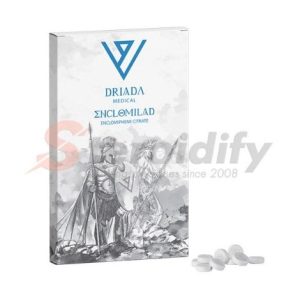
Showing the single result
Enclomiphene is half of clomiphene, isolated
Clomiphene citrate is not a single substance. It is a mixture of two isomers — enclomiphene and zuclomiphene — in roughly a 60:40 ratio. They behave very differently, and separating them is the entire reason this product exists. This section currently holds 1 line at £50.
What each isomer does
| Isomer | Behaviour | Half-life |
|---|---|---|
| Enclomiphene | Anti-oestrogenic at the hypothalamus; raises LH, FSH and testosterone | Short — days |
| Zuclomiphene | Weakly oestrogenic; contributes little to the intended effect | Very long — weeks |
The effect people want from clomiphene — restarting the signal from the hypothalamus and pituitary after suppression — comes almost entirely from the enclomiphene half.
Why the other half causes the problems
Zuclomiphene has a much longer half-life, so it accumulates with repeated dosing. Its oestrogenic activity is the leading candidate explanation for the mood changes and visual disturbances that make some people abandon clomiphene entirely.
Removing it should, in principle, keep the useful action and drop the side effects most likely to end treatment. That is the case for enclomiphene, and it is a genuinely well-reasoned one rather than a marketing story.
What the evidence supports
Enclomiphene has been studied in men with secondary hypogonadism and raises testosterone while maintaining LH and FSH — which distinguishes it from exogenous testosterone, where those signals are suppressed and fertility falls. It reached late-stage clinical development but has not been approved as a licensed medicine.
So it is better evidenced than most of this catalogue and not an approved treatment. Both are true.
Where it fits
The obvious application is post cycle therapy, where restarting natural production is the goal, and it competes directly with tamoxifen and clomiphene for that role. It is also of interest to anyone who wants raised testosterone without shutting down their own production, which exogenous testosterone always does.
It is not a licensed medicine in the UK and nothing here is medical advice.
Why it appeared when it did
Interest rose alongside growing awareness that long-term exogenous testosterone means permanent dependence on it, and infertility while it is being taken. A compound raising testosterone by stimulating the body’s own axis addresses both, which is why it draws attention from a different audience than most of this catalogue.
Whether it raises testosterone as far as exogenous testosterone does is a separate question, and the answer is generally no — it works within what the axis can produce.
Frequently asked questions
Is enclomiphene the same as clomid?
It is one of the two isomers in clomiphene, isolated — the one responsible for the intended effect.
Why separate the isomers?
Zuclomiphene is weakly oestrogenic, accumulates because its half-life is long, and is the likely source of the mood and vision side effects.
Does it suppress natural production?
No — it works by stimulating it. LH and FSH rise rather than falling.
Is it approved?
No. It reached late-stage clinical development but is not a licensed medicine.
Why only one product?
It is a comparatively new arrival in this market. The section will expand as supply does.


