
DSIP
Showing all 7 results
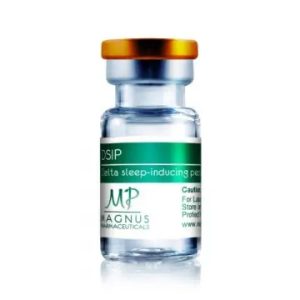
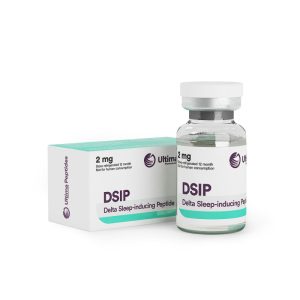
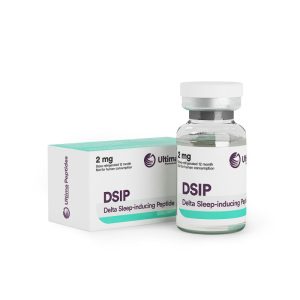
Showing all 7 results
DSIP is named after an effect it does not reliably produce
Delta sleep-inducing peptide was isolated in the 1970s from the blood of rabbits in an induced sleep state, and named for the delta-wave activity associated with deep sleep. This section holds 7 lines from £57 to £116, averaging near £69.
The name is the strongest sleep claim attached to it, and it was assigned on the basis of where it was found rather than on demonstrated effect.
What the research actually shows
Decades of subsequent work have not established DSIP as a reliable sleep agent in humans. Some studies report improvements in sleep quality in specific populations; others find nothing. It has also been investigated for effects on pain perception, stress hormones and alcohol withdrawal, with similarly mixed results.
The honest summary is that it is a peptide with genuine biological activity whose most-advertised application is its least well-supported one.
The blood-brain barrier question
For a peptide to affect sleep architecture it must reach the brain. Whether DSIP crosses the blood-brain barrier in meaningful quantity when administered peripherally is contested, and it is a live question rather than a settled one.
If it does not cross adequately, a central effect is difficult to explain regardless of what the molecule does in isolation.
Where it sits in this catalogue
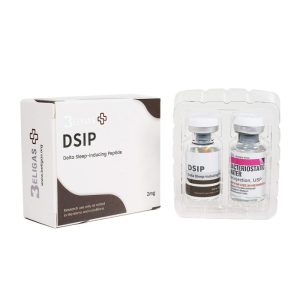
It is not suppressive, not androgenic, and requires no PCT. It shares the peptides handling requirements: lyophilised on arrival, reconstituted with bacteriostatic water, refrigerated afterwards.
Anyone whose sleep problem follows from a compound rather than existing independently — trenbolone insomnia being the obvious case — is treating a symptom of something addressable at source, which is usually the better move.
What the sleep research field looks like
Sleep is unusually difficult to study. Subjective sleep quality and measured sleep architecture frequently disagree, placebo effects are large, and small trials produce unstable results. That is part of why DSIP’s literature is as inconsistent as it is, and it is a reason to be cautious about any strong claim in this area rather than about this peptide specifically.
Where it sits against the alternatives
Nothing else in this catalogue is sold primarily for sleep, though several compounds actively disrupt it. Growth hormone secretagogues in the growth hormone range are reported to improve sleep quality as a secondary effect, with more consistent user reports behind that than DSIP has for its primary claim.
Supplier verification is covered in how to check a brand is genuine.
Why it keeps selling
Poor sleep is close to universal and genuinely miserable, the name promises a direct solution, and there is no easily checked outcome that would tell a buyer it had not worked. That combination is enough to sustain a product on the shelf regardless of what the literature actually says about it.
Frequently asked questions
Does DSIP actually induce sleep?
Not reliably in humans. The name reflects the circumstances of its discovery, not a demonstrated effect.
Where does the name come from?
It was isolated from rabbits in an induced sleep state and named for the associated delta-wave activity.
Does it reach the brain?
Contested. Whether peripheral administration achieves meaningful central levels is unresolved.
Is it suppressive?
No. It does not act on the androgen axis and needs no post cycle therapy.
What else has it been studied for?
Pain perception, stress hormones and alcohol withdrawal, all with mixed results.


