
Research Overview: HGH Fragment 176-191
HGH Fragment 176-191 is a synthetic peptide derived from the C-terminal region of human growth hormone, specifically comprising amino acids 176-191. This research compound has gained significant attention in laboratory studies investigating metabolic processes and adipose tissue regulation. Researchers at Stroid UK Shop utilise this peptide to examine its unique properties in cellular metabolism without the broader systemic effects associated with full-length growth hormone. The fragment maintains the lipolytic activity of the parent hormone while demonstrating enhanced selectivity for fat tissue interactions in experimental models.
Laboratory Applications and Research Protocols
In controlled laboratory environments, scientists investigate HGH Fragment 176-191’s mechanisms of action on adipocyte metabolism and energy expenditure pathways. Research protocols commonly examine the peptide’s interaction with growth hormone receptors and its subsequent effects on cellular signalling cascades. Studies within the metabolic research category frequently evaluate this compound alongside other investigative tools. The peptide’s stability profile and reconstitution characteristics make it suitable for extended research programmes examining metabolic modulation. Comparative studies often analyse this fragment against full-length growth hormone preparations and other research peptides to understand differential mechanisms.
Technical Specifications
| Parameter | Specification |
|---|---|
| Molecular Weight | 1815.1 Da |
| Sequence | Tyr-Leu-Arg-Ile-Val-Gln-Cys-Arg-Ser-Val-Glu-Gly-Ser-Cys-Gly-Phe |
| Purity | ≥98% by HPLC |
| Storage Temperature | -20°C |
| Solubility | Water-soluble |
| Appearance | White lyophilised powder |
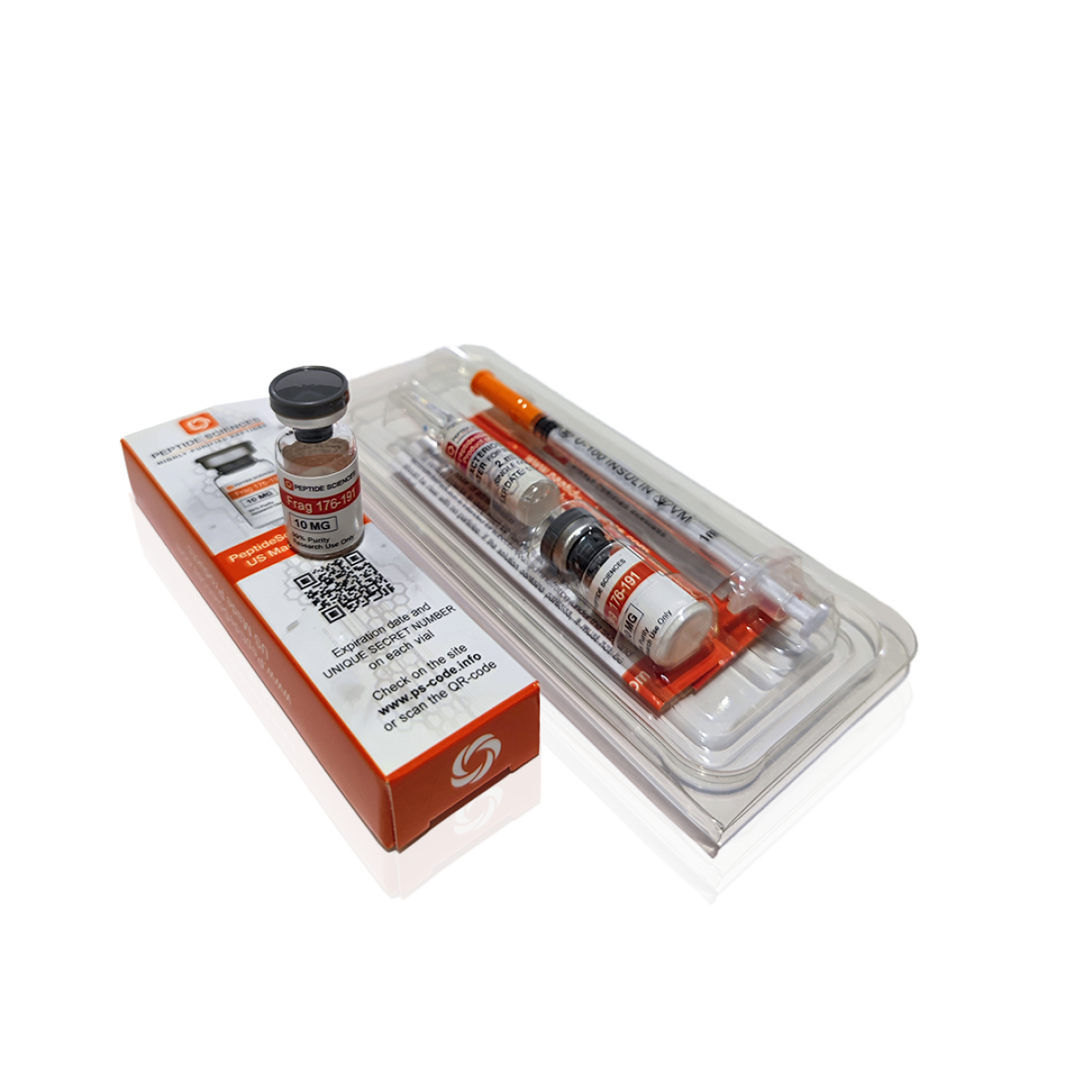
Each vial contains 10mg of research-grade peptide manufactured by Peptide Sciences under strict quality control protocols. The compound exhibits excellent stability when stored appropriately and demonstrates consistent reconstitution properties across research batches. Laboratory analysis confirms the peptide’s structural integrity through mass spectrometry and amino acid composition verification. Researchers frequently combine this compound with other investigative agents from the selective modulators category to study synergistic metabolic effects.
Research Compliance and Laboratory Use
This product is manufactured exclusively for in-vitro research applications and is not intended for human consumption, therapeutic use, or any form of in-vivo administration. Researchers must maintain appropriate laboratory conditions and follow institutional guidelines when handling this compound. All studies should be conducted within approved research facilities with proper safety protocols and documentation procedures.