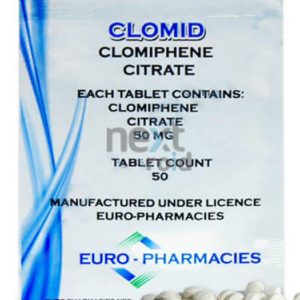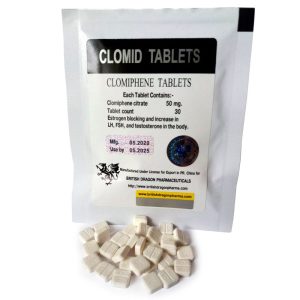

Overview of Clomid Pharmaqo
Clomid Pharmaqo is a pharmaceutical-grade clomiphene citrate formulation designed for advanced post-cycle therapy research applications. This selective estrogen receptor modulator (SERM) enables researchers at Stroid UK Shop to investigate complex hormonal regulatory mechanisms in controlled laboratory environments. Clomiphene citrate represents a cornerstone compound in endocrinology research, offering scientists the opportunity to examine hypothalamic-pituitary-gonadal axis modulation through selective estrogen receptor antagonism and agonism depending on target tissue specificity.
The compound operates through competitive inhibition at hypothalamic estrogen receptors, subsequently promoting gonadotropin-releasing hormone secretion in experimental models. Research teams investigating clomiphene citrate protocols utilise this mechanism to study luteinising hormone and follicle-stimulating hormone release patterns. Contemporary laboratory investigations examine clomiphene’s dual nature as both estrogen receptor antagonist in hypothalamic tissue and partial agonist in hepatic environments, providing valuable insights into tissue-selective hormone modulation pathways.
Post-Cycle Therapy Research Applications
Laboratory studies examining clomiphene citrate focus extensively on endogenous testosterone recovery mechanisms following experimental androgen administration protocols. Research teams analyse the compound’s ability to restore normal gonadotropin secretion patterns through hypothalamic estrogen receptor blockade, effectively removing negative feedback inhibition on the hypothalamic-pituitary axis. Scientists investigating post-cycle recovery models examine clomiphene’s comparative effectiveness against other SERMs, studying dose-response relationships and temporal dynamics of hormonal restoration. Advanced research protocols incorporate clomiphene alongside complementary compounds available through SARM research collections to evaluate synergistic recovery mechanisms.
Experimental investigations demonstrate clomiphene’s unique pharmacological profile, exhibiting approximately 38% bioavailability with extensive hepatic metabolism through CYP2D6 pathways. Research teams studying metabolic clearance examine the compound’s active metabolite formation, particularly investigating zuclomiphene and enclomiphene isomer activities. Laboratory protocols examining duration of action typically observe effects persisting 5-7 days post-administration in experimental models, enabling researchers to study sustained gonadotropin stimulation patterns. Comparative studies utilising peptide research compounds evaluate clomiphene’s mechanisms against alternative hypothalamic-pituitary axis modulators.
Research Specifications
| Parameter | Specification |
|---|---|
| Chemical Name | 2-[4-(2-chloro-1,2-diphenylethenyl)phenoxy]-N,N-diethylethanamine citrate |
| CAS Number | 50-41-9 (clomiphene citrate) |
| Molecular Formula | C₂₆H₂₈ClNO•C₆H₈O₇ |
| Molecular Weight | 598.08 g/mol |
| Purity | Verify with supplier |
| Solubility | Water soluble (citrate salt) |
| Storage Temperature | Room temperature, protected from light |
| Research Applications | SERM studies, PCT investigations, endocrinology research |
Laboratory Research Compliance
Clomid Pharmaqo is manufactured exclusively for in-vitro research applications and experimental investigations in qualified laboratory environments. This product is not intended for human consumption, therapeutic use, or any application outside controlled scientific research protocols. Researchers must maintain appropriate laboratory safety standards and comply with institutional research guidelines when handling this compound. All experimental work should be conducted by qualified personnel with proper training in SERM research methodologies and post-cycle therapy investigation protocols.