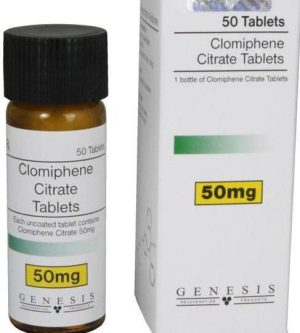
Understanding CLOMID-50 INTEX PHARMA
Clomiphene citrate is a selective estrogen receptor modulator belonging to the triphenylethylene class of compounds, extensively documented in reproductive endocrinology research. CLOMID-50 from Intex Pharma provides researchers with a standardised preparation for investigating estrogen receptor antagonism at hypothalamic sites whilst studying agonist activity in peripheral tissues. This compound demonstrates tissue-selective estrogen receptor modulation, making it valuable for examining the complex interplay between estrogen signalling pathways and gonadotropin regulation in controlled laboratory environments.
Laboratory Applications
Research teams examine clomiphene citrate’s mechanism of competitive binding at estrogen receptors, particularly focusing on its ability to promote luteinising hormone and follicle-stimulating hormone release through hypothalamic-pituitary axis modulation. Studies frequently investigate its pharmacokinetic profile, including its active metabolites zuclomiphene and enclomiphene, which exhibit differing half-lives and receptor affinities. Researchers at Stroid UK Shop utilise this compound alongside other post-cycle therapy compounds to examine hormonal recovery mechanisms. Comparative studies often evaluate clomiphene’s effects against selective androgen receptor modulators and peptide compounds to understand receptor selectivity patterns.
Technical Specifications
| Parameter | Value |
|---|---|
| Active Compound | Clomiphene Citrate |
| Concentration | 50mg per unit |
| CAS Number | 50-41-9 |
| Molecular Formula | C₃₂H₃₆ClNO₈ |
| Molecular Weight | 598.08 g/mol |
| Storage Conditions | Room temperature, dry environment |
| Manufacturer | Intex Pharma |
Research Compliance
This product is manufactured exclusively for in-vitro laboratory research applications and is not intended for human consumption, therapeutic use, or any clinical applications. Researchers must ensure proper laboratory protocols, appropriate safety measures, and compliance with local regulations when handling this compound. All studies should be conducted within accredited research facilities with appropriate ethical oversight and documentation procedures.