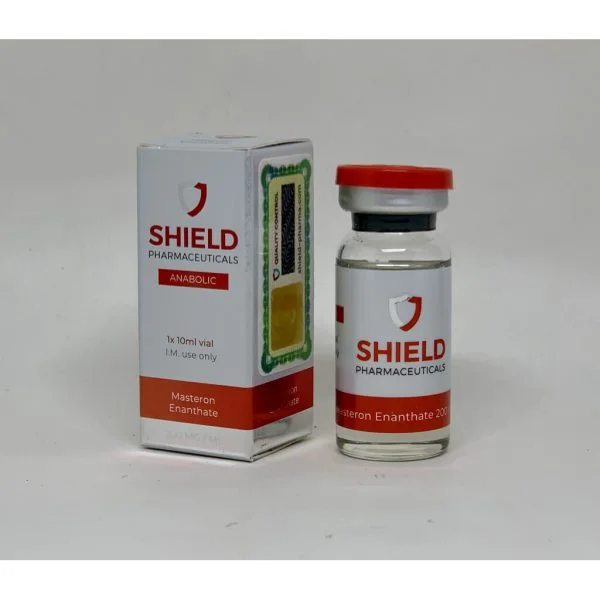

Compound Profile: Masteron Enanthate
Masteron Enanthate 200mg by Shield Pharma is a specialised research compound containing drostanolone enanthate, designed for in-vitro laboratory investigation of androgenic mechanisms. This pharmaceutical-grade preparation enables researchers at Stroid UK Shop to examine the molecular properties and cellular interactions of this distinctive androgenic compound. The 200mg formulation provides consistent concentrations for reproducible experimental protocols, making it an essential tool for advanced steroid research programmes investigating hormonal pathway modulation.
Laboratory Research Applications
Research scientists utilise this compound to investigate androgenic receptor binding affinity and selectivity across various tissue models. Studies examine how drostanolone enanthate interacts with cellular structures, investigating its unique molecular characteristics compared to other compounds available in our drostanolone research category. Laboratory protocols analyse its extended ester chain effects on compound stability and tissue distribution patterns. Researchers compare these findings with complementary compounds from our SARMS collection and peptides range to establish comprehensive understanding of androgenic compound mechanisms. Advanced studies investigate its molecular interactions within controlled laboratory environments, examining binding kinetics and cellular uptake mechanisms.
Technical Specifications
| Parameter | Specification |
|---|---|
| Active Compound | Drostanolone Enanthate |
| Concentration | 200mg/ml |
| Manufacturer | Shield Pharma |
| Molecular Formula | C27H44O3 |
| Molecular Weight | 416.64 g/mol |
| CAS Number | 472-61-145 |
| Storage Temperature | Room temperature, dry conditions |
| Research Grade | Pharmaceutical standard |
Research Compliance Statement
This Masteron Enanthate 200mg Shield Pharma formulation is manufactured exclusively for in-vitro research applications and laboratory analytical studies. This compound is not intended for human consumption, clinical use, or any application outside controlled research environments. Researchers must ensure appropriate laboratory protocols and safety measures are implemented when handling this research chemical for scientific investigation purposes.