
Montair Chewable at a Glance
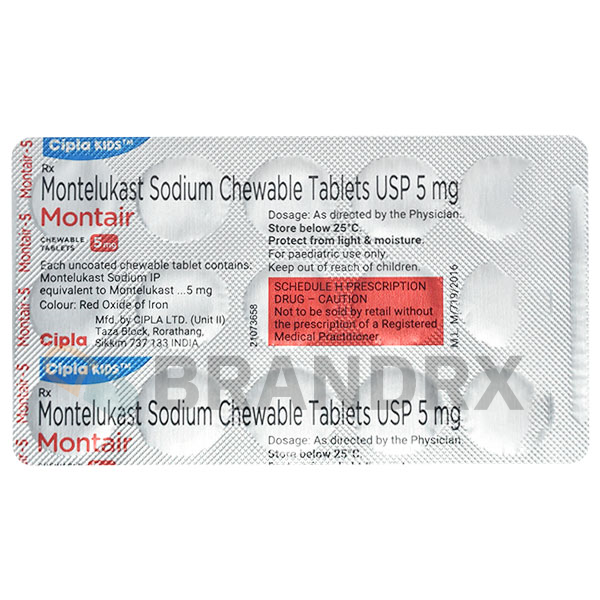
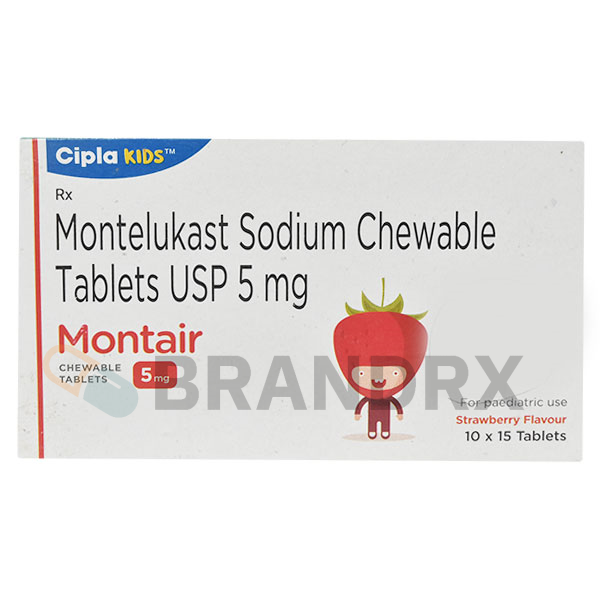
Montair Chewable 5 mg is a leukotriene receptor antagonist research chemical manufactured by Cipla, formulated as convenient chewable tablets for laboratory investigations. This compound belongs to the montelukast class of selective cysteinyl leukotriene receptor type 1 (CysLT1) antagonists, designed for researchers studying inflammatory pathways and allergic responses in controlled experimental settings. The chewable formulation provides enhanced convenience for preparation of research solutions while maintaining consistent compound integrity. Research applications focus on the compound’s mechanism of action in blocking cysteinyl leukotrienes, key mediators in allergic and inflammatory processes.
Laboratory scientists investigating respiratory inflammation models often utilise this compound to examine leukotriene pathway modulation in cell culture systems. The 5 mg dosage strength enables precise preparation of research solutions for dose-response studies, while the tablet formulation allows for accurate weighing and dissolution protocols. Researchers at Stroid UK Shop have access to comprehensive analytical documentation supporting experimental design parameters. Quality control procedures ensure consistent batch-to-batch performance for reproducible research outcomes across multiple experimental iterations.
Comparative studies examining different montelukast formulations often incorporate this research chemical alongside other respiratory modulators for comprehensive pathway analysis. The compound’s selectivity for CysLT1 receptors makes it valuable for investigating specific inflammatory cascades without interference from other receptor systems. Research protocols typically examine concentration-dependent effects on inflammatory mediator release, cellular migration patterns, and tissue response modulation in various experimental models.
Advanced research applications extend beyond basic inflammatory studies to include investigations of metabolic pathways and cellular signalling mechanisms. Laboratories studying complex inflammatory networks often combine this compound with research chemicals from the SARM category or peptide research compounds to examine multi-target therapeutic approaches in comprehensive experimental designs.
Laboratory Applications
Research scientists employ Montair Chewable 5 mg in diverse experimental protocols examining leukotriene pathway modulation and inflammatory response mechanisms. Cell culture studies utilise this compound to investigate CysLT1 receptor antagonism effects on inflammatory mediator release, including prostaglandins, histamine, and cytokine production in stimulated cell lines. Tissue culture experiments examine the compound’s influence on smooth muscle contraction, vascular permeability, and inflammatory cell recruitment patterns. Biochemical assays evaluate the compound’s selectivity profile against other leukotriene receptors and related inflammatory pathway components.
Molecular biology research applications focus on gene expression studies examining how CysLT1 antagonism affects transcriptional regulation of inflammatory genes. Researchers investigate downstream signalling pathways influenced by leukotriene receptor blockade, including NFκB, MAPK, and calcium-dependent signalling cascades. Protein expression analysis studies examine changes in inflammatory marker production following compound treatment in various experimental models. Pharmacokinetic research evaluates absorption, distribution, and metabolic characteristics using appropriate analytical methodologies.
Technical Specifications
| Parameter | Specification |
|---|---|
| Active Ingredient | Montelukast Sodium |
| Strength | 5 mg per tablet |
| Formulation | Chewable tablets |
| Manufacturer | Cipla Limited |
| Storage Conditions | Room temperature, dry conditions |
| Solubility | Verify with supplier documentation |
| Molecular Formula | C₃₅H₃₆ClNO₃S |
| CAS Number | Verify with supplier documentation |
Research Use Compliance
Montair Chewable 5 mg tablets are supplied exclusively for in-vitro research applications and laboratory studies. This compound is not intended for human consumption, clinical use, or any form of in-vivo application. Researchers must maintain appropriate laboratory safety protocols and disposal procedures when handling this research chemical. All experimental work should be conducted by qualified laboratory personnel with appropriate safety training and equipment.