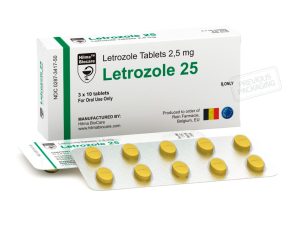

Product Overview: Letrasan 2.5 Deva
Letrasan 2.5 Deva is a potent third-generation aromatase inhibitor containing letrozole as the active pharmaceutical compound. This research chemical from Deva represents one of the most selective and reversible inhibitors of the CYP19A1 enzyme available for laboratory investigation. Letrozole demonstrates exceptional binding affinity to the aromatase enzyme, making it invaluable for researchers examining estrogen biosynthesis pathways and hormonal regulation mechanisms in controlled laboratory environments.
Biochemical Applications
Research scientists investigate Letrasan for its comprehensive aromatase inhibition properties across multiple tissue types. Studies examine how this compound affects estrogen synthesis in adipose, muscle, liver, and breast tissue cultures, providing insights into steroidogenic enzyme function. Investigators at Stroid UK Shop utilise letrozole to explore post-menopausal estrogen production mechanisms and evaluate cellular responses to reduced estradiol availability. Comparative studies with other aromatase inhibitors help researchers understand structure-activity relationships within this therapeutic class. Additionally, researchers studying hormonal interactions often combine letrozole investigations with selective androgen receptor modulators and peptide compounds to examine complex endocrine feedback mechanisms.
Product Specifications
| Parameter | Specification |
|---|---|
| Active Ingredient | Letrozole |
| Concentration | 2.5mg per tablet |
| CAS Number | 112809-51-5 |
| Molecular Formula | C₁₇H₁₁N₅ |
| Molecular Weight | 285.30 g/mol |
| Manufacturer | Deva Pharmaceutical |
| Purity Grade | Pharmaceutical standard |
| Storage Conditions | Room temperature, dry environment |
Research Compliance
This product is manufactured exclusively for in-vitro research applications and scientific investigation purposes. Letrasan 2.5 Deva must not be used for human consumption, therapeutic treatment, or any clinical applications. Researchers must maintain appropriate laboratory safety protocols and ensure proper storage conditions throughout all experimental procedures. All studies should comply with institutional research guidelines and applicable scientific safety standards.